
Last updated November 2, 2026
 Sweep & inspection
 Caps & crowns
 Flue relining
 Masonry repair
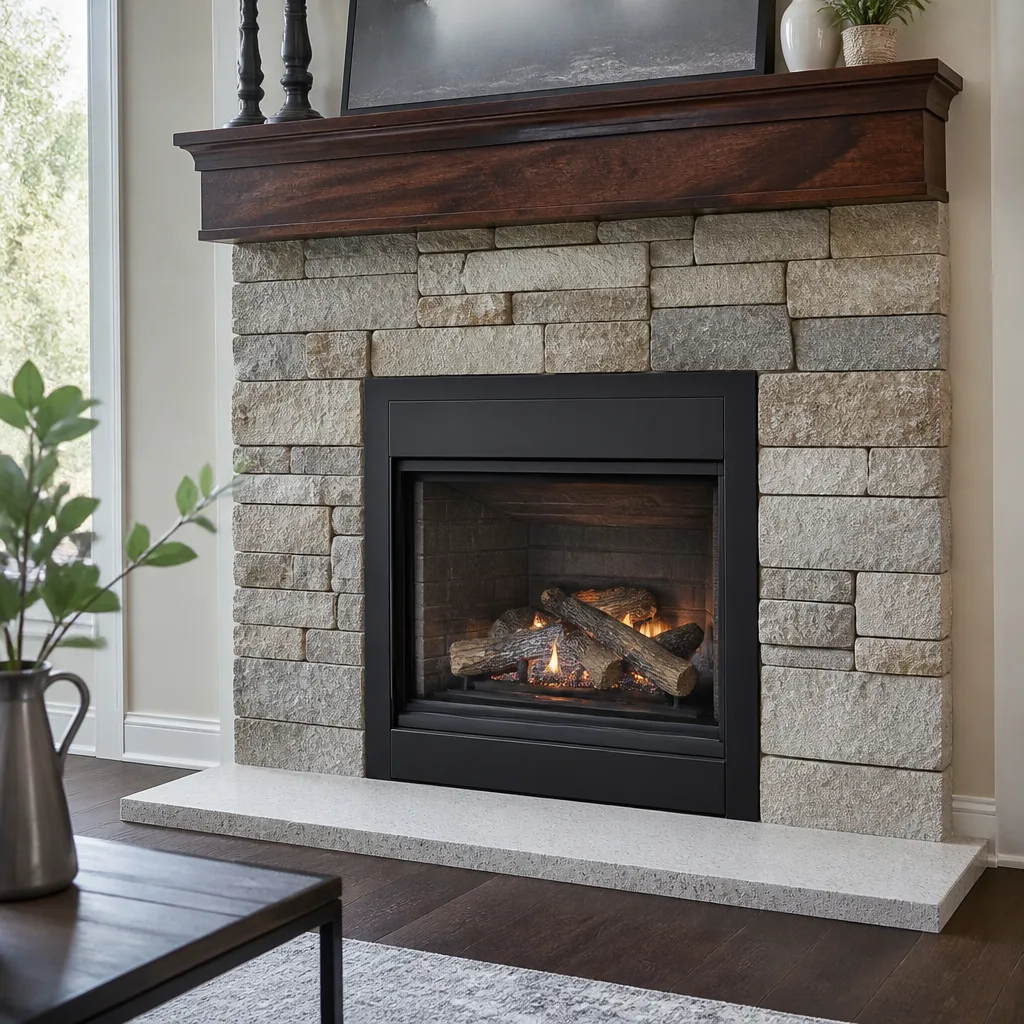 Gas fireplace service
Level 1 sweep and inspection to the NFPA 211 annual standard - flue, crown, cap, and flashing checked and photographed
Chimney sweep logs do not sweep chimneys. They loosen some creosote - which then falls where a brush and vacuum still have to collect it.
Chimney Sweep Troubleshooting: Common Problems and How to Fix Them
Smoke backing into your living room isn’t always a dirty flue. It’s just as often a pressure imbalance caused by a tight modern house, a competing bathroom exhaust fan, or a mismatched damper throat, and sweeping won’t fix any of those. This guide maps the symptoms homeowners in Bernal Heights call us about most often to the mechanical causes behind them, using the same diagnostic order we follow on a service call. You’ll learn what you can safely inspect yourself, what needs a camera, and when a problem is urgent versus when it can wait.
Quick Answer
Most chimney problems fall into one of four categories: draft failure, odor, moisture intrusion, or mechanical wear. Smoke rollback usually points to a draft or pressure problem, not a dirty flue. Odors are either creosote (seasonal, heat-activated) or moisture (musty, year-round), and the two require completely different fixes. Start with what you can see: the cap, the crown, and the damper, then work inward only with a professional camera inspection if symptoms persist.
Styles & brands we work with
- Sweep & inspection
- Caps & crowns
- Flue relining
- Masonry repair
- Gas fireplace service
Table of Contents
- Smoke Rollback: Why It Happens and What It Actually Means
- Creosote Odor vs. Moisture Odor: Two Smells, Two Repair Paths
- Why a Freshly Swept Chimney Can Still Fail a Draft Test
- Chimney Height, Roof Peaks, and the Bernal Heights Rooftop Addition Problem
- What You Can Inspect Yourself vs. What Needs a Camera
- Damper Problems: Stuck Open, Stuck Closed, or Just Worn Out
- Dryer Vent Symptoms That Mimic Chimney Problems
- Common Mistakes to Avoid
- When to Call a Professional
- Frequently Asked Questions
Smoke Rollback: Why It Happens and What It Actually Means
Smoke rollback is the symptom we hear about most in Bernal Heights, and it’s also the most misdiagnosed. Homeowners assume it means the chimney is clogged. Sometimes it does. But just as often, the flue is clean and the problem is that the room can’t supply enough replacement air for the volume the fire is pulling up the chimney.
Here’s the diagnostic order we use, because it separates mechanical causes from structural ones:
- Check the damper first. If it’s partially closed or the throat is obstructed, smoke has nowhere to go except back into the room. A damper that no longer opens fully because of rust or a bent linkage will cause rollback even with a perfectly clean flue.
- Look for competing exhaust sources. A bathroom fan, range hood, or even a clothes dryer running in the same air envelope will pull air down the chimney, reversing the draft. In older Bernal Heights homes that have been weather-sealed, this effect is worse because there’s no passive makeup air.
- Check for a cold flue. A chimney that hasn’t been used in weeks will have a column of cold air sitting in it. Cold air sinks. Light a rolled newspaper and hold it up near the damper opening before a fire to prime the draft. If the smoke from the newspaper gets pulled up, the flue is working and the room pressure was the problem.
- If all three check out, then look for obstruction. A partial blockage from a collapsed liner, an animal nest, or heavy creosote accumulation will reduce the flue’s effective cross-section.
One Bernal Heights specific note: homes on the east slope catch the morning marine layer, which means cool, dense air sitting at roof level that can suppress draft until the fire is fully established. If rollback happens only in the first ten minutes of a fire, that’s a cold-flue or pressure problem, not a dirty chimney.
Creosote Odor vs. Moisture Odor: Two Smells, Two Repair Paths
Odor is the second most common complaint, and the trick is knowing which smell you’re dealing with. They require different responses, and mixing them up wastes time and money.
Creosote odor is smoky, acrid, and gets stronger when the chimney warms up or when humidity rises. You’ll notice it most in summer when the sun heats the masonry, or on a damp day. The cause is creosote deposits inside the flue releasing volatiles as they warm. The fix is a sweep. If the odor persists after a sweep, the creosote has likely penetrated the flue’s porous surface, and the solution is resurfacing with a product like HeatShield ceramic coating, which seals the surface and locks the odor in. That’s a repair, not a cleaning, and it’s the step many sweeps miss.
Moisture odor is different. It’s musty, earthy, and present year-round regardless of whether you’ve had a fire. The cause is water getting into the chimney system: a cracked crown, failed flashing, spalling brick, or a missing cap. You cannot sweep this away. The fix is finding the entry point and repairing it, which may mean crown work, a new cap from a brand like Gelco or Olympia Chimney, or flashing repair at the roofline.
Here’s the quick discriminator: heat-activated odor is creosote. Constant odor is moisture. If you smell it on a hot summer day with no fire in months, it’s creosote. If you smell it after every rain, it’s water.
Why a Freshly Swept Chimney Can Still Fail a Draft Test
This is the scenario that frustrates homeowners: they paid for a sweep, the technician said the flue was clean, and the fireplace still smokes. In our experience, there are three structural conditions that survive a cleaning and cause draft failure:
- Undersized flue for the firebox opening. A fireplace with a face opening that’s too large for its flue diameter will always struggle to pull. The ratio matters, and it’s fixed by either reducing the opening or installing a flue liner system that improves the draft profile. A DuraFlex liner can sometimes correct a marginal draft by smoothing the flow path through an older clay tile flue.
- Short chimney height relative to surrounding roof lines. If the chimney terminates less than two feet above any point within ten horizontal feet, wind can curl over the roof peak and push down into the flue. This is a downdraft, and no amount of sweeping will change it. The fix is adding height to the chimney or installing a draft-improving cap.
- Negative pressure from the house itself. A newly installed high-efficiency furnace, a kitchen renovation with a powerful range hood, or even new windows can tip a borderline house into negative pressure. The chimney becomes the house’s fresh-air intake, and smoke follows the pressure gradient outward.
If you’ve had a sweep in the last six months and you’re still seeing smoke, the next step is a draft test and a camera inspection of the flue’s interior geometry, not another sweep. We see this pattern regularly in Bernal Heights, where older chimneys meet modernized houses and the two don’t always agree.
Chimney Height, Roof Peaks, and the Bernal Heights Rooftop Addition Problem
Bernal Heights has a specific architectural pattern that creates chimney problems: rooftop additions. When a homeowner adds a second story or a dormer, the roofline changes. A chimney that once cleared the peak by three feet may now sit below the new plane of the roof.
The rule most building codes follow is that a chimney should terminate at least three feet above the point where it penetrates the roof, and at least two feet higher than any part of the structure within ten horizontal feet. When a rooftop addition violates that geometry, the chimney ends up in a wind shadow. Air moving across the new roofline curls over the peak and pushes downward into the flue. The result is intermittent downdraft: smoke rollback on windy days, poor performance on still days, and sometimes a smell of ash in the house even when there’s no fire.
The fix depends on the severity. Adding a chimney extension above the new roofline is the permanent solution. In some cases, a properly designed draft-inducing cap, like the ones from Famco or Copperfield, changes the pressure dynamics enough to compensate. The wrong fix is installing a powered vent fan without first measuring the actual pressure differential, which is a real-world issue we’ve corrected when enthusiastic contractors installed fans that pulled too hard and actually stole air from the firebox.
If you’ve done a rooftop addition in the last few years and your fireplace hasn’t drawn correctly since, the addition is almost certainly a factor. The chimney didn’t get shorter; the roof got taller.
What You Can Inspect Yourself vs. What Needs a Camera
There’s a safe dividing line between what a homeowner can check and what requires a professional. We’ll be direct about both, because the dangerous parts of a chimney are genuinely dangerous.
Safe to inspect yourself:
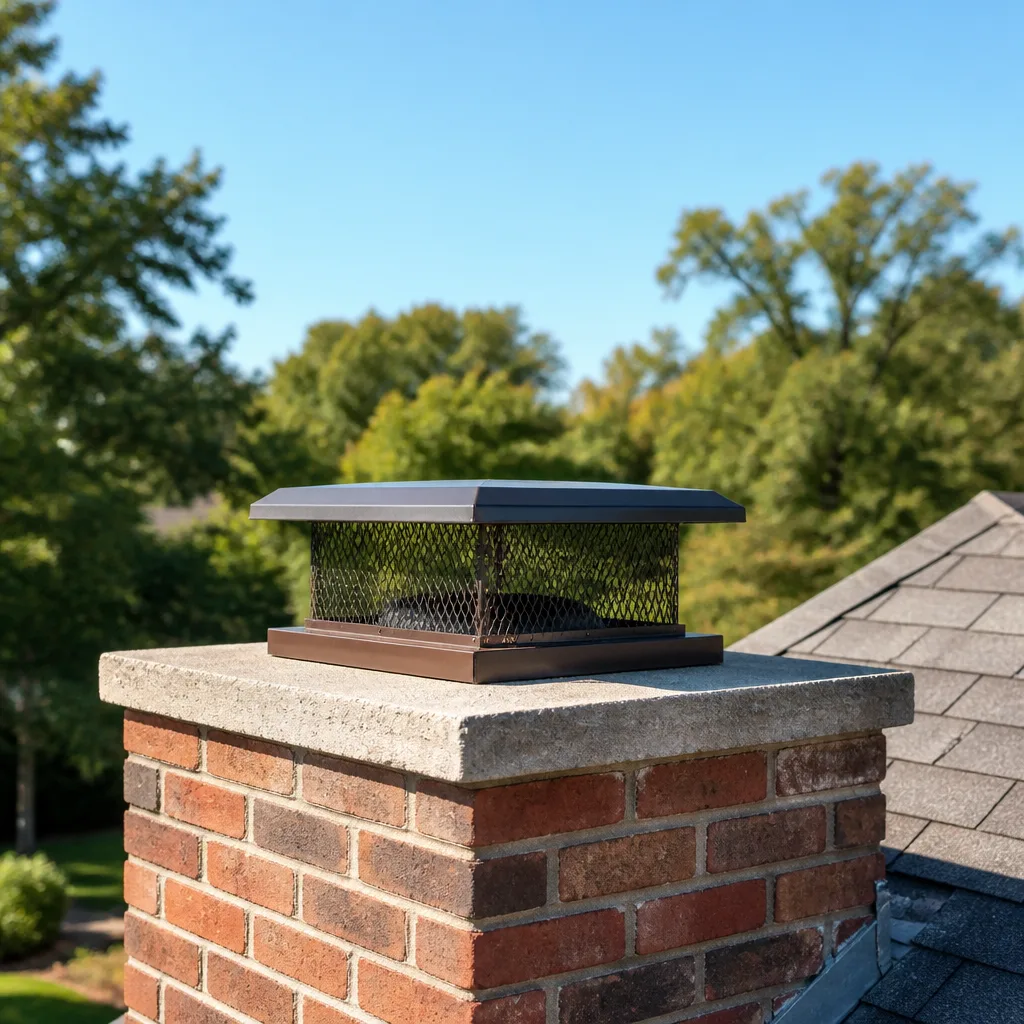
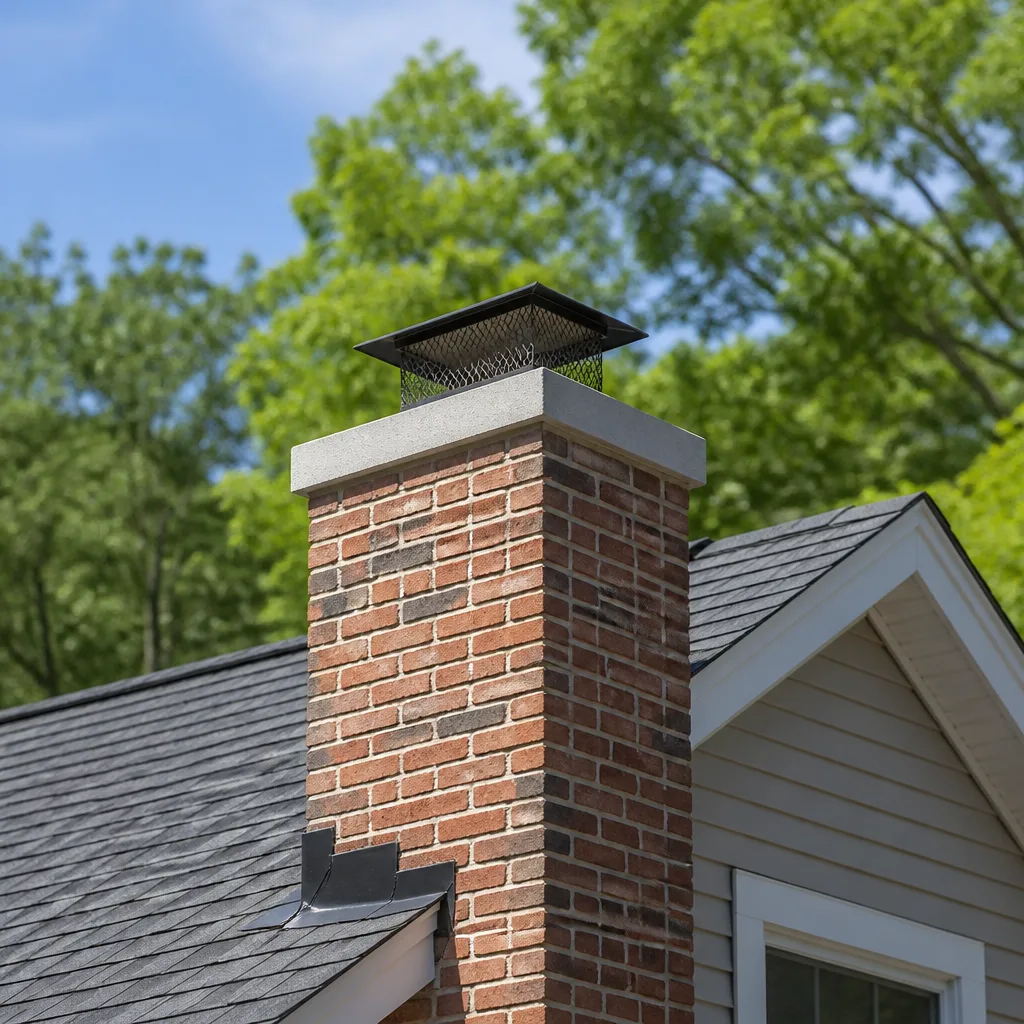
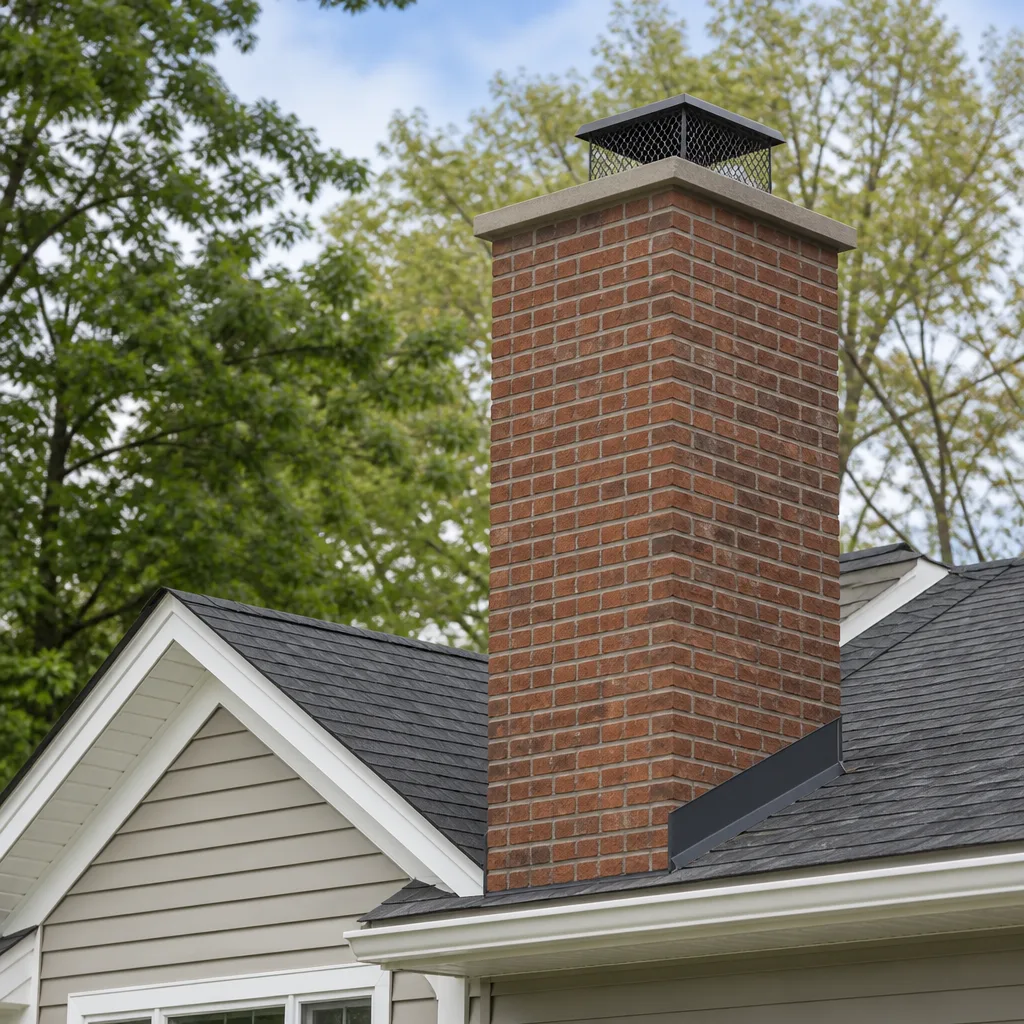
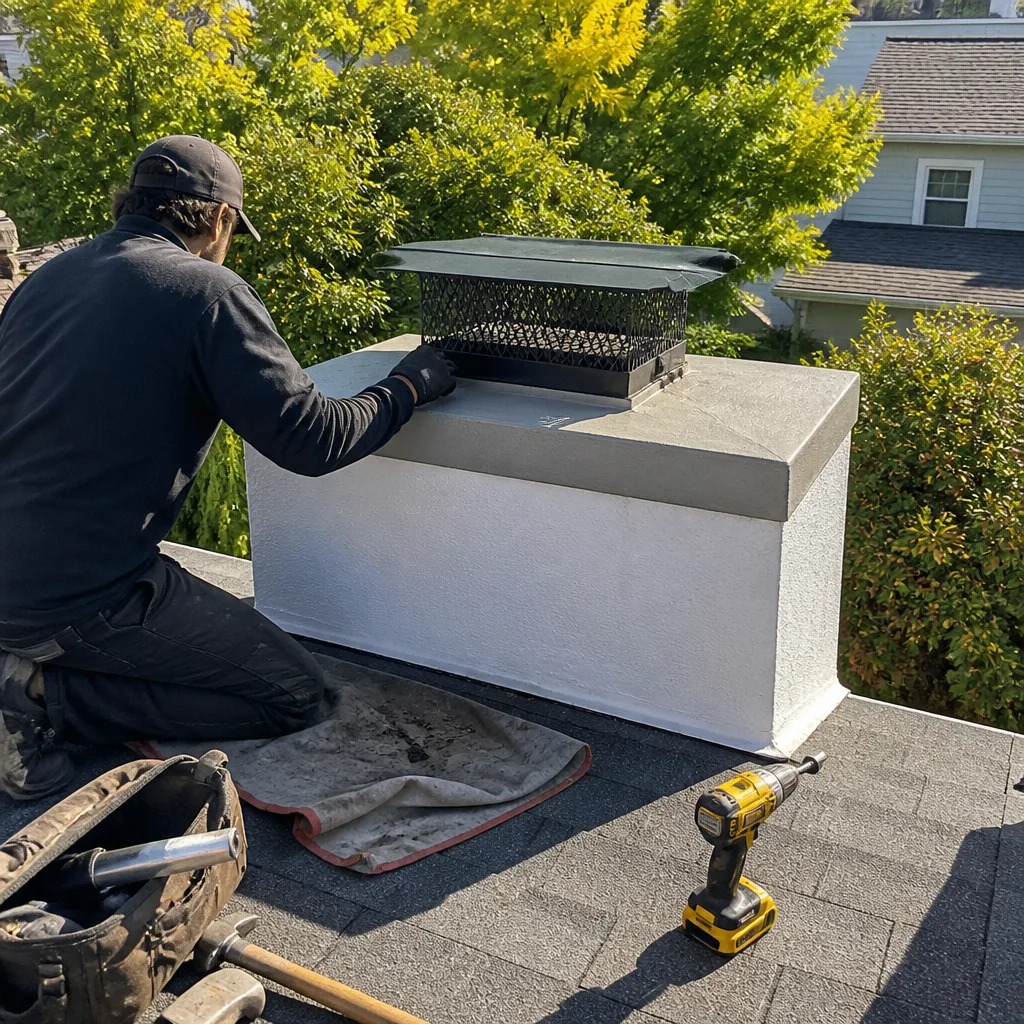
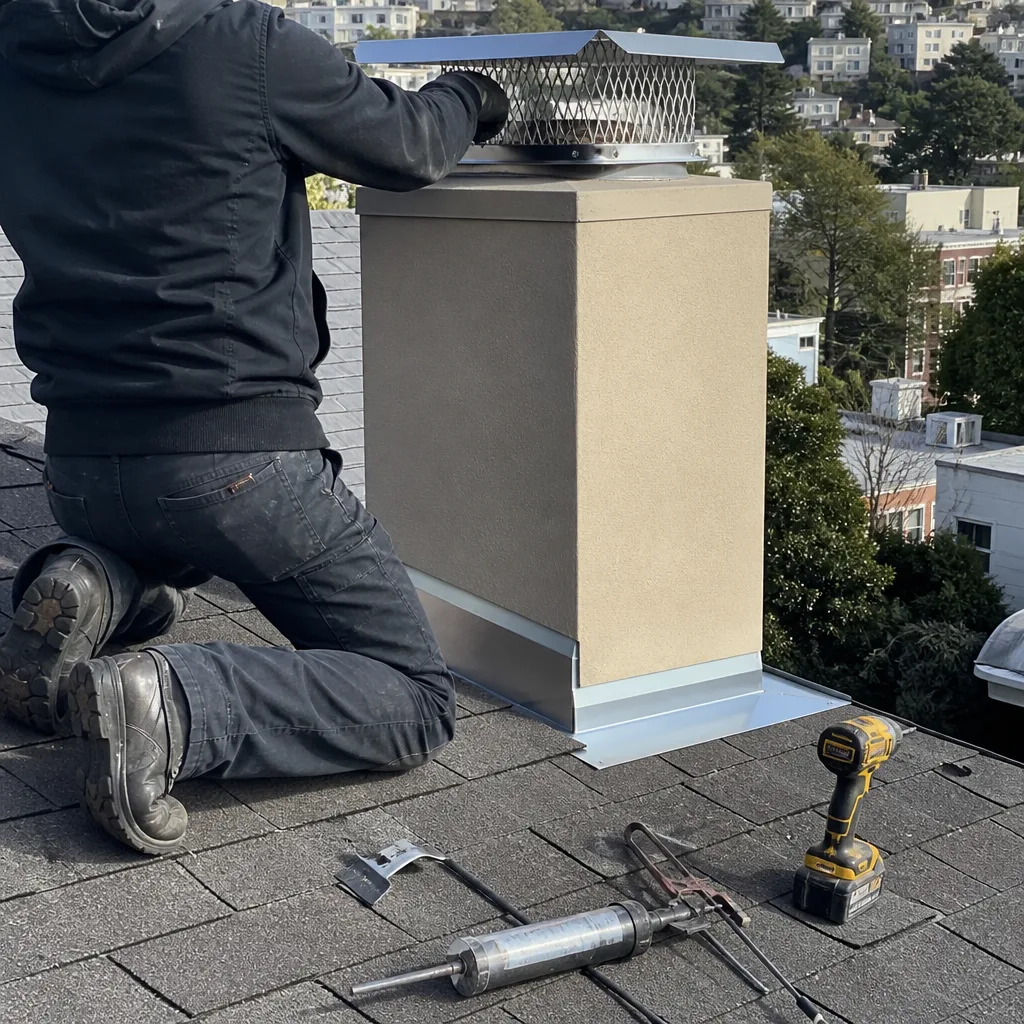
- The cap. Look for a missing cap, a damaged mesh screen, or visible rust. A cap isn’t decorative; it keeps rain, animals, and debris out. If yours is missing, that’s a problem worth fixing before the next rain.
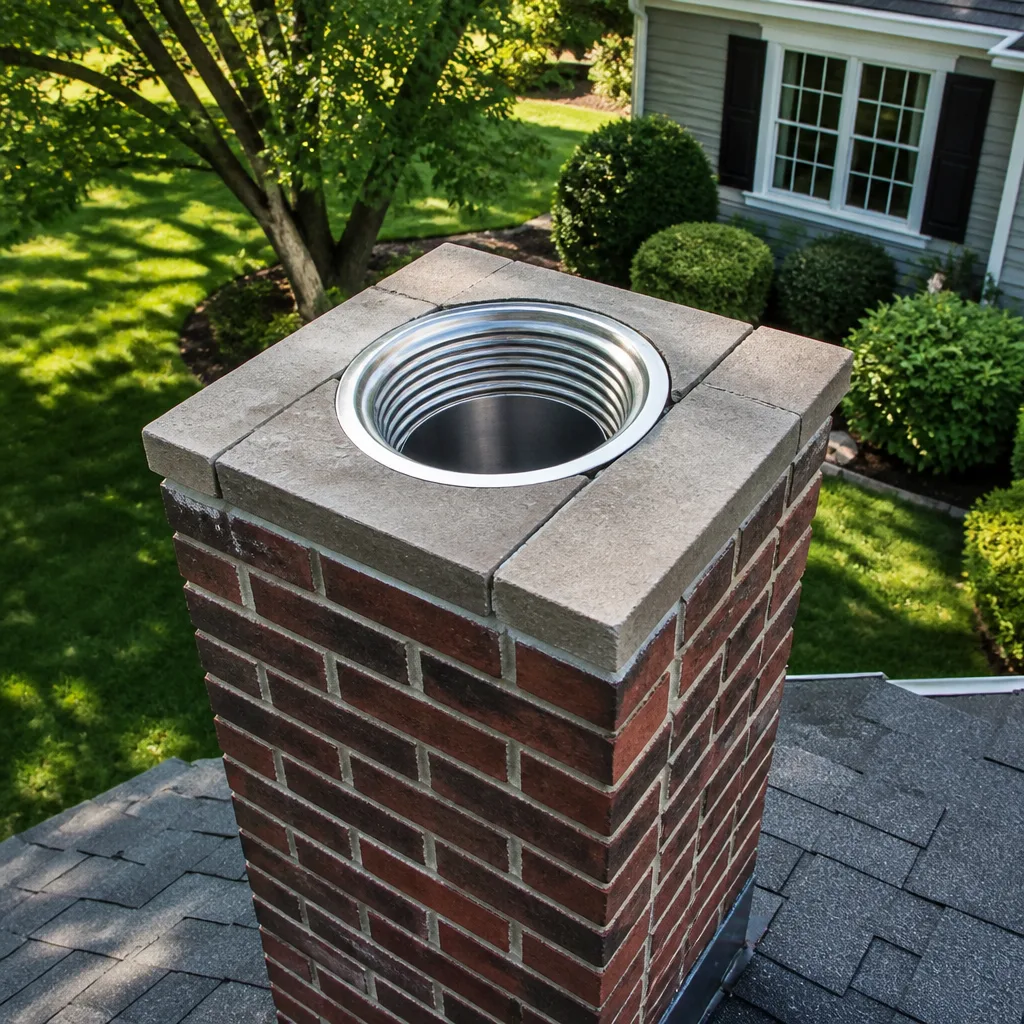
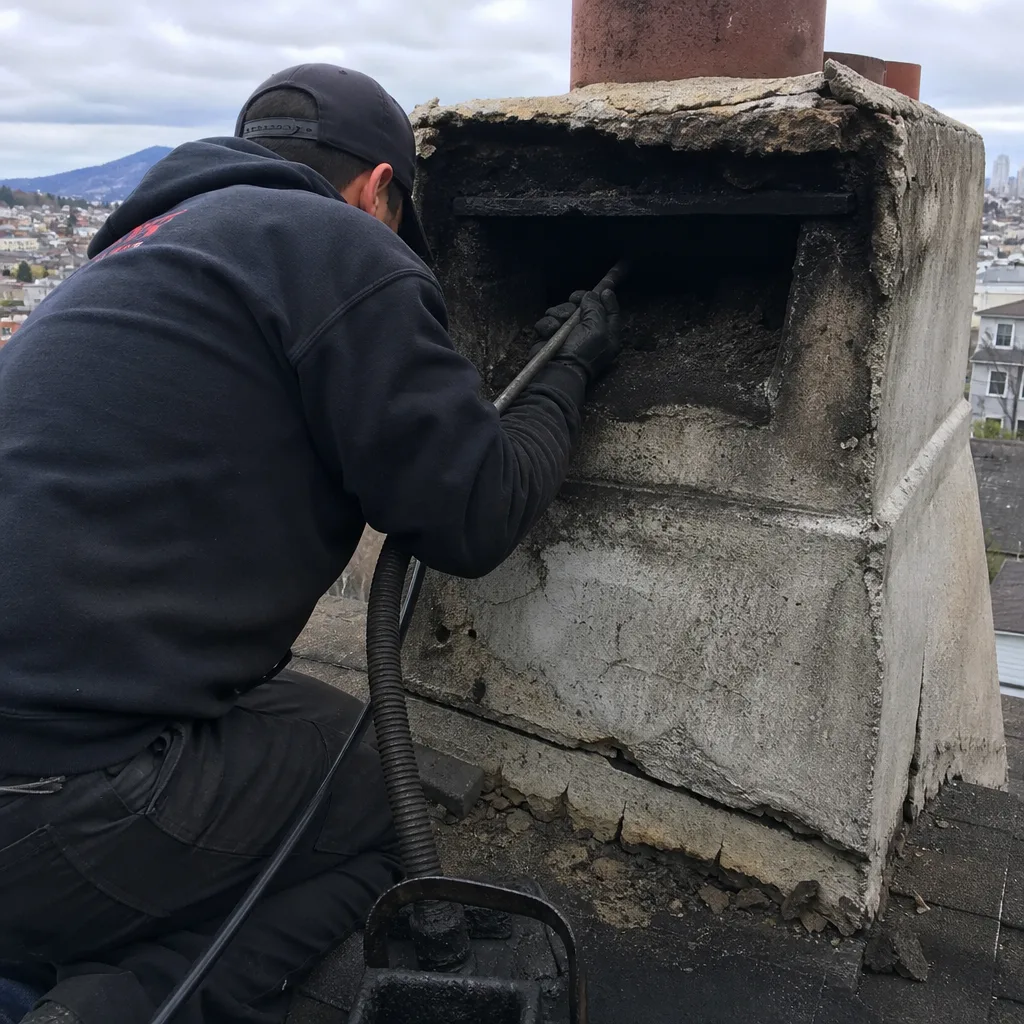
- The crown (visible portion). From the ground or a safe roof vantage point with a sturdy ladder, look for cracks in the concrete crown at the top of the chimney. Hairline cracks let water into the masonry.
- The damper. Open and close it. It should move freely and seat fully. If it sticks, squeals, or won’t close completely, the linkage needs attention.
- The firebox walls. With a flashlight, look for crumbling mortar joints, spalled brick faces, or white staining (efflorescence) that indicates water penetration.
Needs a professional camera:
- The flue interior. You cannot see a cracked tile liner, a separated mortar joint, or a partial blockage from the top or bottom. A camera inspection shows the full length of the flue and documents what’s there.
- Creosote thickness. Creosote isn’t just the black soot you can see; glazed creosote looks like shiny tar and is a fire hazard. Measuring it requires instruments and experience.
- Structural condition of the liner. A liner can look fine from the outside and be failing internally. Only a camera can confirm the state of the clay tiles or the presence of a liner system that’s failed internally.
One thing to be clear about: chimney work at height is not a DIY project. The fall risk from a roof is real, and the interior masonry work requires training. If you’re not comfortable on a roof, don’t go up there to look at the cap. We’ve had customers who hired us specifically because they didn’t want to climb a ladder on a Bernal Heights hillside where the ground at the base of the ladder isn’t level.
Damper Problems: Stuck Open, Stuck Closed, or Just Worn Out
The damper is the most mechanical part of your chimney system, and it’s also the part most homeowners touch least. Dampers fail in predictable ways, and each failure mode creates a distinct symptom.
Stuck open means warm air escapes up the flue all winter, and cold air drops into the house. You’ll feel a draft near the fireplace even when it’s not in use. The cause is usually a broken linkage or a warped plate from years of heat. The fix on older units is replacement, often with a top-sealing damper that mounts at the flue top and seals with a gasket, which also does a better job stopping air infiltration than the original throat damper ever did.
Stuck closed means the fireplace is unusable until fixed. The cause is almost always rust on the pivot or damage to the operating handle. Forcing it will break the lever or warp the plate, which turns a simple repair into a replacement. If the handle doesn’t move with moderate pressure, stop and call someone.
Worn out is the sneakiest category. The damper moves, but it doesn’t seat fully. A gap as small as a quarter inch changes draft behavior and lets considerable air move through. The test is simple: with the damper closed, hold a lit match or a lighter flame near the opening. If the flame flickers or leans, air is moving. Some air movement is normal in older houses; visible, consistent airflow is a sign the damper is leaking.
On the materials side, we replace worn dampers with units from manufacturers like Famco and Copperfield, which are built to survive repeated thermal cycling without warping. The cheap cast-iron dampers that came with many 1970s-era Bernal Heights homes are the ones we most often find cracked or seized.
Dryer Vent Symptoms That Mimic Chimney Problems
One of the reasons we do dryer vent cleaning alongside chimney work is that the symptoms overlap more than people expect. A clogged dryer vent causes moisture problems inside the house, and in some layouts, that moisture migrates toward the chimney chase, where homeowners mistake it for a chimney leak.
Here’s how to tell the difference:
- Lint accumulation inside the vent duct restricts airflow. The dryer takes longer to dry clothes, and the exterior vent flap doesn’t open fully during operation. If your dryer needs two cycles for a normal load, the vent is the first place to look, not the chimney.
- Moisture on walls near the chimney chase can come from a dryer vent that’s leaking warm, humid exhaust into the wall cavity. The moisture then condenses on cool surfaces. Before assuming a chimney leak, check whether the dryer is on the other side of the wall.
- Musty smell near the laundry room that you also notice near the fireplace may be dryer exhaust moisture migrating through wall cavities where the two systems share a chase.
Dryer vent clogs are a leading cause of residential structure fires, and the failure mode is sneaky: lint builds up over time, airflow drops, and the heating element runs hotter than designed. The fix is mechanical cleaning of the full vent run, not just the visible portion behind the dryer. We treat dryer vents with the same seriousness as chimneys because in a Bernal Heights house, they’re often running through the same walls.
If your home has both a wood-burning fireplace and a dryer, the exhaust systems interact. A dryer running during a fire pulls air from the room, which can trigger smoke rollback. It’s the same pressure issue described earlier, just with a different appliance as the culprit.
Common Mistakes to Avoid
- Sweeping a chimney that has a structural draft problem. A clean chimney with a bad height-to-roof ratio still won’t draft. If the first sweep didn’t fix the smoke, the second sweep won’t either. Ask for draft testing before another cleaning.
- Ignoring a missing chimney cap. A cap costs less than a liner replacement, but a missing cap lets rain in every storm, and Bernal Heights gets real rain in winter. The water damage compounds over years before you see it.
- Treating all chimney odors with a sweep. Musty odor is moisture, not creosote. Sweeping a wet chimney doesn’t remove the water source, and the smell returns within weeks.
- Using a fireplace with a known cracked liner. A cracked clay tile liner exposes the surrounding masonry to heat and combustion byproducts. The risk is a chimney fire spreading into the house structure. If you know the liner is cracked, the fireplace is out of service until it’s repaired.
- Closing the damper on a warm day and forgetting about it. If you go months without using the fireplace, close the damper but set a reminder to check it before the next fire. A damper that sticks closed after being shut all summer is a common service call in fall.
- Assuming a new house has a clean chimney. Buyers in Bernal Heights often discover the previous owner never had the chimney swept. Always get a chimney inspection in Bernal Heights before using a fireplace in a newly purchased home.
- Installing a chimney fan without measuring the problem. A draft-inducing fan is a useful tool in the right situation, but it’s a guess without first measuring actual pressure differentials. We’ve removed fans that were oversized for the flue and made the problem worse.
When to Call a Professional
You should call a professional when the problem is inside the flue, on the roof, or involves any part of the system you can’t see clearly. That includes: smoke rollback that persists after checking the damper and priming the flue, any odor you can’t identify or that doesn’t resolve with a sweep, visible cracks in the firebox or crown, a damper that won’t move, or any water staining on the ceiling near the chimney. Also call if you’ve had a chimney fire, even a small one, because the internal damage is never visible from the outside.
Chimney Sweep Bernal Heights offers free estimates in Bernal Heights. Call (844) 745-4668 to schedule a sweep, a camera inspection, or a full system check.
Frequently Asked Questions
A standard chimney sweep in Bernal Heights typically costs between $180 and $340 depending on the type of fireplace, the condition of the flue, and whether the home has multiple flues or unusual roof access. Gas and wood-burning systems are priced differently. The best way to get an exact number is to call (844) 745-4668 for a free estimate, since the final price depends on what a sweep actually finds.
Yes, and here’s why: a cracked clay tile liner cannot be patched effectively, and it’s a fire safety issue because the flue no longer contains the heat and combustion byproducts. That said, a full liner replacement isn’t always the only option. If the original tile structure is still sound enough to act as a form, HeatShield ceramic resurfacing can sometimes restore the liner at lower cost than a full chimney repair. The decision depends on the extent of the damage, which a camera inspection documents. Any recommendation you receive should include photos you can see for yourself.
The National Fire Protection Association recommends a sweep at least once per year for wood-burning fireplaces, but the real answer depends on use. If you burn more than two cords of wood in a season, you may need two sweeps. Gas fireplaces need less frequent cleaning but still require annual inspection of the venting system. If you’ve just moved into a home in Bernal Heights, assume the chimney needs a sweep before the first fire.
Creosote accumulates in layers. The fluffy soot is easy to remove; the later stages become tar-like and then glazed, and that glazed creosote is a fuel source for a chimney fire. A chimney fire burns extremely hot and can crack the liner, damage the masonry, and in the worst case, spread into the house structure. The risk isn’t theoretical, and the damage is cumulative even if you can’t see it from the firebox. Call (844) 745-4668 to schedule a sweep if it’s been more than a year.
Summer chimney odor is almost always creosote. The sun heats the masonry, the creosote warms, and the volatiles release into the house, often made worse by humidity. The immediate fix is a sweep. If the odor persists after a proper sweep, the creosote has penetrated the flue’s porous surface and needs to be sealed with a resurfacing treatment rather than just cleaned again.
You can clean the firebox and remove ash, but cleaning the flue itself requires specialized brushes, ladders, roof access, and training. The fall risk on a Bernal Heights roof is real, and an improper cleaning can miss creosote buildup that a professional would catch. The dangerous part of chimney work isn’t usually the cleaning; it’s the roof. We recommend having a professional handle anything above the roofline.
The Bottom Line
Chimney problems are mechanical problems with specific causes, and the cause is rarely obvious without looking in the right place. Smoke rollback is usually pressure, not dirt. Odor is either heat-activated creosote or year-round moisture, never both. A chimney that fails after a sweep has a structural issue, not a cleaning issue. And in Bernal Heights, with its hillside lots and rooftop additions, the roof geometry itself is often part of the formula. If you’re seeing symptoms you can’t explain, start with the visible parts, check the pressure, and call (844) 745-4668 for a free estimate when the problem is above the roofline or inside the flue. From sweep to repair, one call covers it.
Written by the team at Chimney Sweep Bernal Heights, serving Bernal Heights since 2016.
See the difference
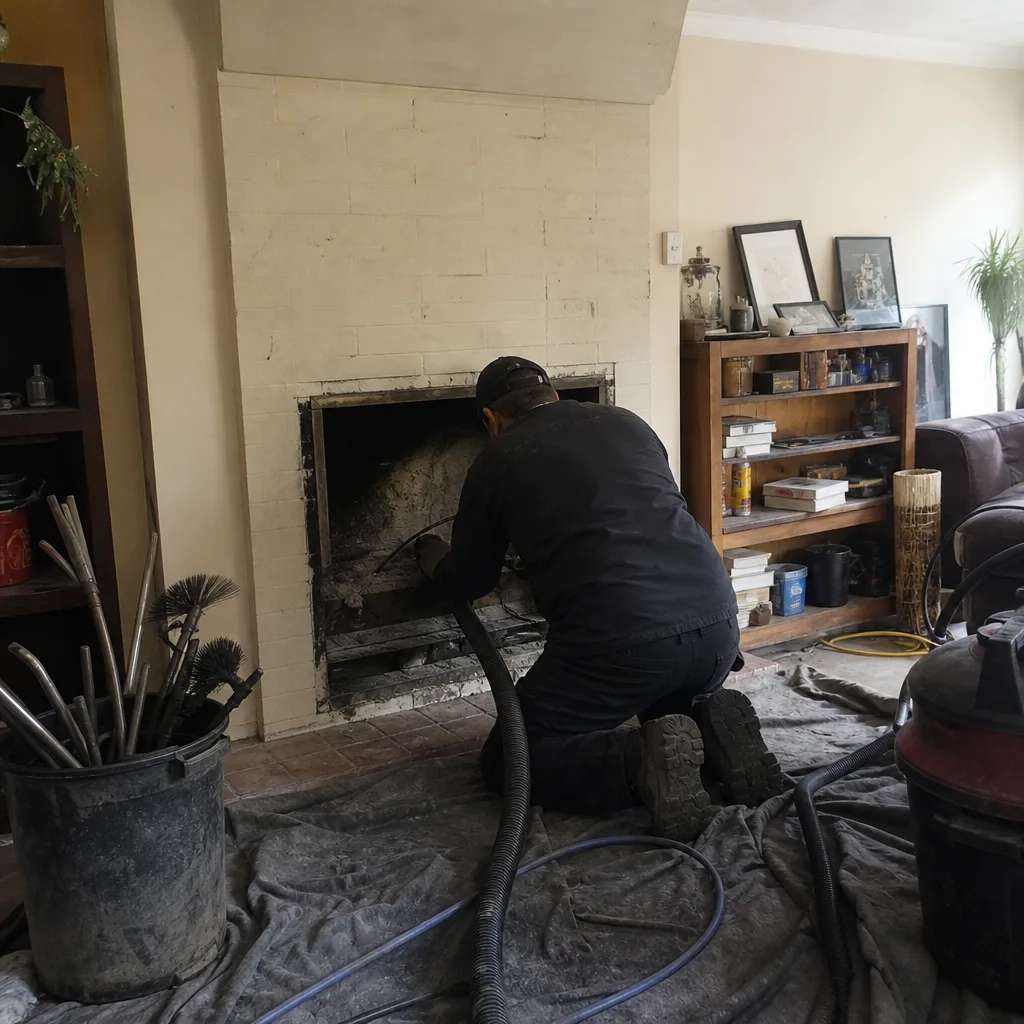 Before
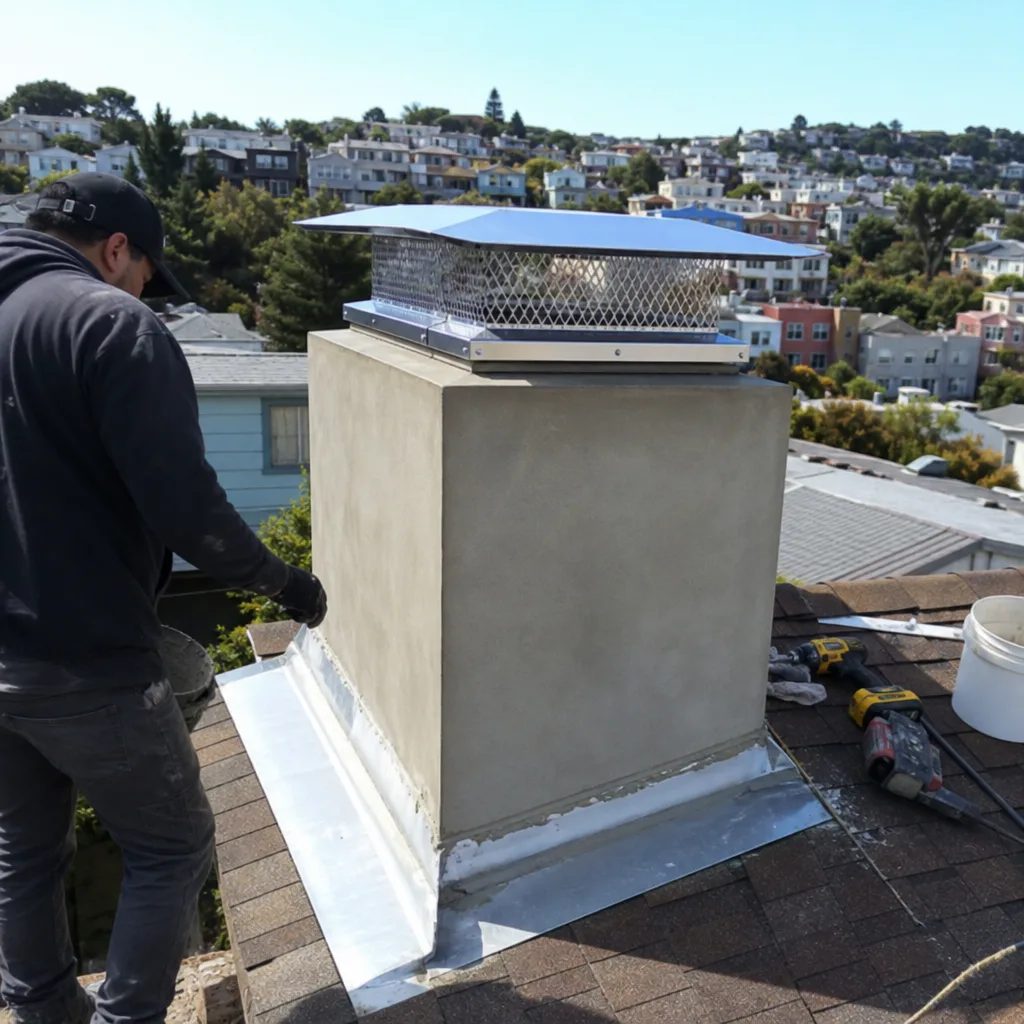 After
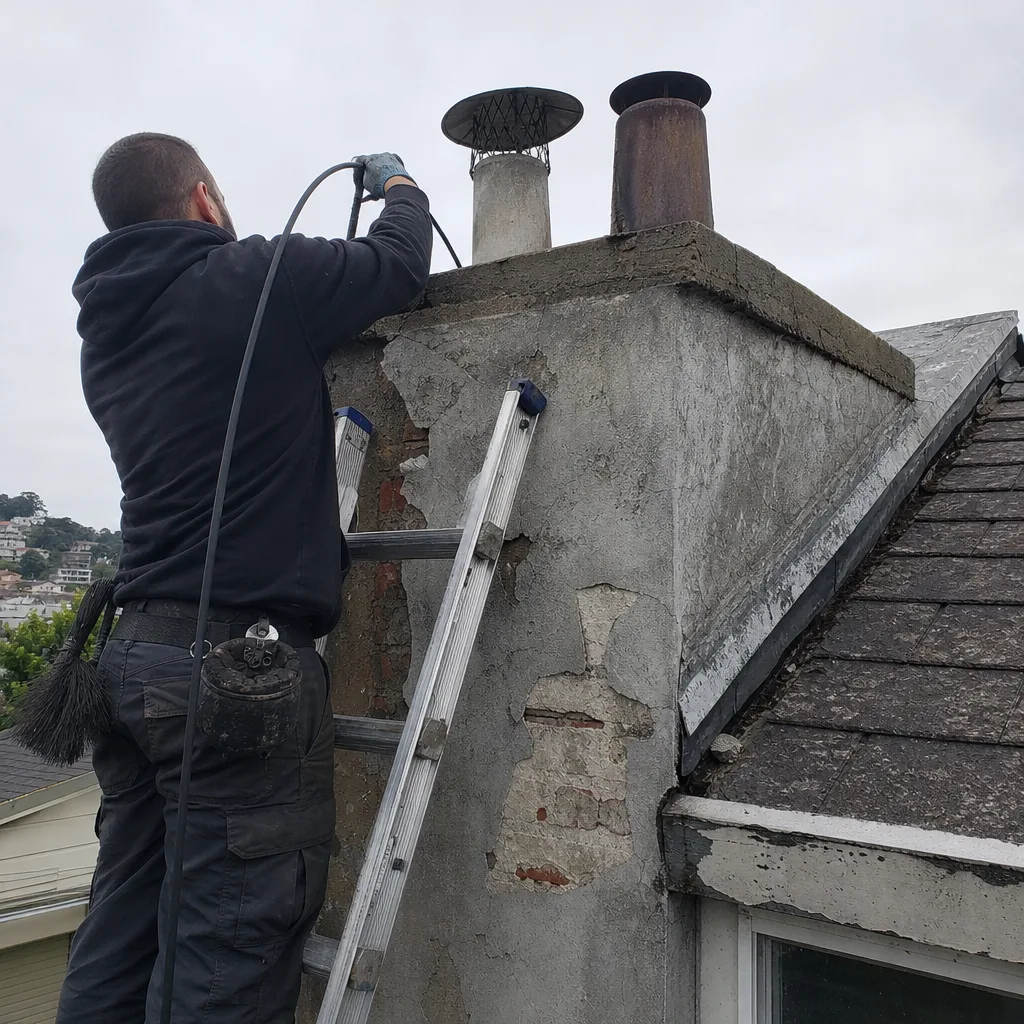 Before
 After
 Before
 After